
How Meditation Helped Me Quit 6 Cups of Coffee a Day
How Meditation Helped Me Quit 6 Cups of Coffee a Day
I used to drink more than six cups of coffee every morning. That's over 750mg of caffeine before noon, well into addiction territory according to EBSCO Research Starters (2024). Meditation didn't just help me quit. It transformed how I relate to cravings entirely.
If you're ready to build this kind of awareness, our meditation workshops teach the techniques that helped me break free.
This isn't another willpower story. It's about building self-awareness strong enough to see through the pull of addiction. After 18 months caffeine-free, I'm sharing exactly how meditation made the difference, backed by research showing mindfulness reduces cravings by 67% compared to standard approaches (JAMA Network Open, 2025).
Key Takeaways
- Consuming 750mg+ daily (6+ cups) puts you at highest addiction risk (EBSCO, 2024)
- Mindfulness-based interventions reduce cravings by 67% vs 44% with standard support
- Caffeine withdrawal peaks at 20-51 hours, resolves within 2-9 days
- 28% of caffeine consumers meet dependence criteria
- Self-awareness through meditation makes letting go sustainable

How Much Coffee Is Too Much?
According to the Mayo Clinic (2025), 400mg daily, roughly four cups, is considered safe for most adults. Consuming 750mg to 1 gram daily puts you at greatest risk for caffeine addiction (EBSCO Research Starters, 2024). Six cups? That's playing with fire.
I didn't think I had a problem. Coffee was just part of my morning routine. But when I tried to skip a cup, the headaches hit hard. The irritability crept in. I realized I wasn't choosing coffee anymore. Coffee was choosing me.
Here's what surprised me: 8% of U.S. adults meet the DSM-5 proposed criteria for Caffeine Use Disorder (NCBI PMC, 2020). That's a clinical diagnosis, not just a bad habit. A University of Florida study found that 28% of caffeine consumers meet dependence criteria (AddictionHelp.com, 2025). You might be among them without realizing it.
Citation Capsule: According to NCBI PMC (2020), 8% of U.S. adults meet DSM-5 proposed criteria for Caffeine Use Disorder. This research analyzed clinical diagnostic patterns and found caffeine dependence is more prevalent than commonly recognized.
The signs of caffeine dependence include needing more coffee to feel alert, experiencing withdrawal symptoms when you skip it, and continuing despite knowing it affects your sleep or anxiety. Working with clients on this challenge, I've found most don't connect their afternoon energy crashes to their morning coffee habit.
Learning to recognize these patterns is something we work on together in our meditation workshops.
Why Willpower Alone Fails Against Caffeine
Caffeine withdrawal symptoms begin 12-24 hours after your last dose, peak at 20-51 hours, and typically resolve within 2-9 days (NIH StatPearls, 2025). Up to 50% of people quitting caffeine experience headaches as the primary symptom. That's a brutal few days for willpower to handle alone.
"I should say it was not effortless. It did take a lot of effort."
That honesty matters. We've all heard stories of people who quit something "easily." Those stories don't help when you're staring down withdrawal. The truth is, caffeine has physical hooks in your brain. Your adenosine receptors have adapted to being blocked. When caffeine leaves, those receptors flood with signals telling you something is wrong.
Research from Cambridge University (2024) found that people experiencing caffeine withdrawal show higher levels of depression, anxiety, and stress. The average consumption in that study was 461mg daily, less than what many heavy coffee drinkers consume. So it's not just physical discomfort. Your mood takes a hit too.
What I've observed with meditation practitioners is that those who try to white-knuckle through withdrawal often relapse within the first week. Willpower is a limited resource. When it runs out, the coffee pot wins.
How Meditation Builds Craving Resistance
Mindfulness-based therapy reduces cravings by 67% compared to 44% with standard support alone, according to a January 2025 study published in JAMA Network Open. That's not a small difference. That's the gap between struggling and succeeding.
"The longer that I meditated, I was able to deal with the pull that I had towards caffeine."
In our meditation circles, participants often report that cravings don't disappear, they just lose their power. The urge still arises. But meditation creates a space between the urge and the action. In that space, you have a choice.
A meta-analysis of 17 randomized controlled trials involving 1,228 participants found mindfulness interventions have an effect size of -0.70 for craving reduction (BMC Neuroscience, 2023). In research terms, that's a strong effect. It means meditation isn't just helpful. It's significantly more effective than doing nothing or relying on willpower.
Citation Capsule: According to BMC Neuroscience (2023), a meta-analysis of 17 RCTs with 1,228 participants found mindfulness interventions produce an effect size of -0.70 (95% CI -1.15, -0.26) for craving reduction. This research synthesized evidence across multiple addiction types and consistently found meditation effective.
Mindfulness-Based Relapse Prevention (MBRP) training significantly reduces psychological cravings, as demonstrated in a 4-week intervention with 58 participants (Frontiers in Psychiatry, 2024). The key mechanism? You learn to observe cravings without reacting to them. The craving becomes information, not a command.
The Self-Awareness Breakthrough
"It helped me see that it was not beneficial for me, that I'm hurting myself when I'm drinking that."
This sentence captures something most addiction research misses. Knowledge isn't the same as awareness. I knew caffeine wasn't great for me. Everyone knows that. But meditation made me feel it. I could sense how my body responded to the crash, how my mind became dependent on that external boost, how my natural energy was being hijacked.
That shift from knowing to feeling changes everything. Research from Cambridge University (2024) shows caffeine withdrawal symptoms correlate with higher depression, anxiety, and stress scores. When you're aware of this connection, the temporary buzz stops being worth the cost.
"And with that self-awareness, I was able to let go of it more easily."

In my experience guiding students through this, the breakthrough often comes quietly. They're meditating, noticing their thoughts, and suddenly they see the pattern. The morning coffee isn't about energy. It's about avoiding withdrawal. It's about filling a gap that meditation can fill better.
For personalized guidance on developing this self-awareness, explore 1-on-1 life coaching.
Citation Capsule: According to Cambridge University's Public Health Nutrition journal (2024), people with caffeine withdrawal symptoms show elevated depression, anxiety, and stress (DASS) scores. This research studied adults with average consumption of 461mg/day and found clear links between withdrawal and psychological distress.
What to Expect When You Quit (Day by Day)
Caffeine withdrawal follows a predictable pattern. According to NIH StatPearls (2025), symptoms begin 12-24 hours after your last cup. Here's what happens and how meditation helps at each stage.
Days 1-2: The Onset
Headaches typically start within the first day. You might feel foggy, irritable, or unusually tired. This is when most people reach for "just one cup." Meditation helps by giving you something to do with the discomfort other than fight it. Sit with it. Observe it. Let it pass through you rather than around you.
Days 2-3: Peak Symptoms
This is the hardest stretch. Symptoms hit their maximum intensity somewhere between 20 and 51 hours. You might experience flu-like feelings, difficulty concentrating, or mood swings. A pattern I consistently see with beginners is wanting to skip meditation during this phase. Don't. Even five minutes of sitting helps your nervous system regulate.
Days 4-9: Gradual Resolution
The worst is behind you. Symptoms fade progressively. Your body starts producing its own energy again. This is when meditation becomes about building new habits rather than surviving old ones. The daily practice you maintained during withdrawal becomes the foundation for your caffeine-free life.
Having community support during this transition makes a real difference—join our meditation circle to practice with others going through similar changes.
A tip from my own experience: keep a brief journal during this process. Note your energy levels, mood, and meditation quality each day. You'll see the improvement clearly, even when it doesn't feel obvious in the moment.
18 Months Caffeine-Free: What Changes
"It's been over a year and a half since I quit caffeine and I've been in a completely different space."
Here's what 18 months without caffeine actually feels like. My morning energy is stable. No spike, no crash. I sleep deeper, fall asleep faster, and wake up feeling rested without needing a chemical kickstart. My meditation practice went deeper once caffeine wasn't creating artificial alertness that masked my actual mental state.
What I've observed with meditation practitioners is that caffeine creates a kind of noise in the system. You think you're alert, but you're actually just stimulated. There's a difference. Natural alertness has a calm quality to it. Caffeine alertness has an edge, a slight anxiousness that we normalize because everyone around us has it too.
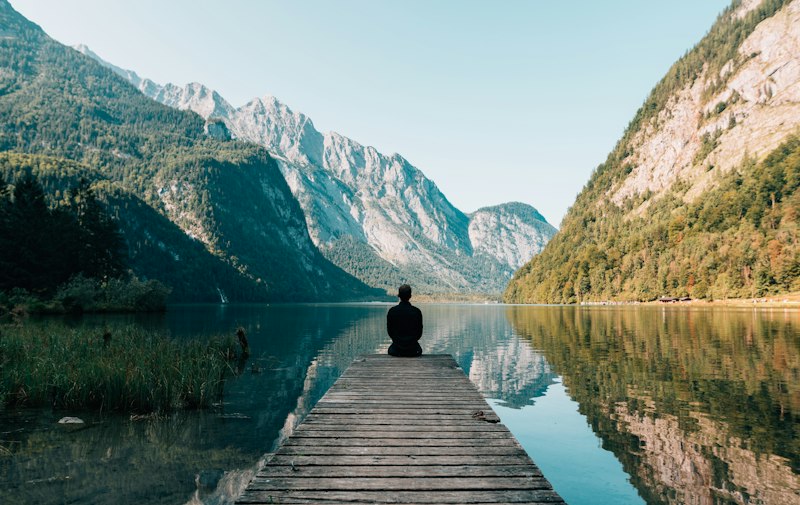
"So if you're looking to deepen your practice of meditation and attain more peace in life, maybe caffeine is something that you need to cut out in your life."
This isn't about being anti-coffee. It's about asking whether coffee is serving your goals or working against them. For me, the answer was clear. Caffeine was interfering with the stillness I was trying to cultivate. Removing it removed an obstacle I didn't know was there.
Citation Capsule: According to EBSCO Research Starters (2024), consuming 750mg to 1 gram of caffeine daily (approximately 5-7+ cups of coffee) puts individuals at greatest risk for caffeine addiction. This threshold represents where physical dependence becomes likely.
Frequently Asked Questions
How long does it take for meditation to help with caffeine cravings?
Most people notice a difference within 2-4 weeks of consistent daily practice. Research shows mindfulness interventions have a strong effect size of -0.70 for craving reduction (BMC Neuroscience, 2023). The key is consistency. Even 10 minutes daily builds the neural pathways that help you observe cravings without acting on them.
Join our meditation circle to start a consistent practice with group accountability.
Can I meditate through caffeine withdrawal headaches?
Yes, though it requires patience. Up to 50% of people quitting caffeine experience headaches (NIH StatPearls, 2025). Meditation won't eliminate the headache, but it changes your relationship to the pain. Focus on breath awareness rather than body scans during peak withdrawal days. The headaches typically resolve within 2-9 days.
Is 6 cups of coffee really that bad?
Six cups delivers roughly 750mg of caffeine, well above the 400mg daily safe limit recommended by the Mayo Clinic (2025). At this level, you're at greatest risk for developing caffeine addiction (EBSCO, 2024). The question isn't whether it's "bad" but whether you can stop without significant discomfort. If you can't, that's dependence.
Should I quit cold turkey or taper off?
Both approaches work, but they feel different. Cold turkey means intense symptoms for 2-9 days. Tapering extends the process but reduces peak discomfort. In my experience guiding students through this, meditation is helpful with either approach. The practice helps you manage whatever withdrawal pattern you choose.
Will quitting caffeine improve my meditation?
For most practitioners, yes. Caffeine creates artificial alertness that can mask your actual mental state. Without it, you'll have access to your natural energy patterns. This makes meditation more authentic and often deeper. The stillness you cultivate becomes yours, not chemically assisted.
Work with a guide through 1-on-1 life coaching to deepen your practice and address personal challenges.
Taking the First Step
Quitting caffeine isn't about willpower. It's about awareness. Meditation builds the capacity to observe cravings without being controlled by them. Research confirms this: mindfulness reduces cravings by 67% compared to standard support (JAMA Network Open, 2025).
Start where you are. If you're drinking six cups a day, you don't have to quit tomorrow. Begin with a daily meditation practice, even just 10 minutes. As your self-awareness grows, you'll naturally see caffeine differently. The pull weakens not because you're fighting it, but because you understand it.
"And whenever the pull came back, I was strong and steadfast and reminded myself why I'm quitting caffeine in the first place."
That strength comes from practice. From sitting with discomfort until it loses its power over you. From building something internal that no external substance can provide.
Ready to begin? Join our meditation circle and start building the awareness that makes change sustainable.
About the Author
Syed Rahman is the founder of Awakening Souls Quest, guiding practitioners through meditation, mindfulness, and spiritual growth. Through meditation circles, workshops, and 1-on-1 life coaching, he helps individuals develop sustainable practices for inner peace and personal transformation.
Join a Meditation Circle | Explore Workshops | 1-on-1 Coaching
